Mobility increasing at pace
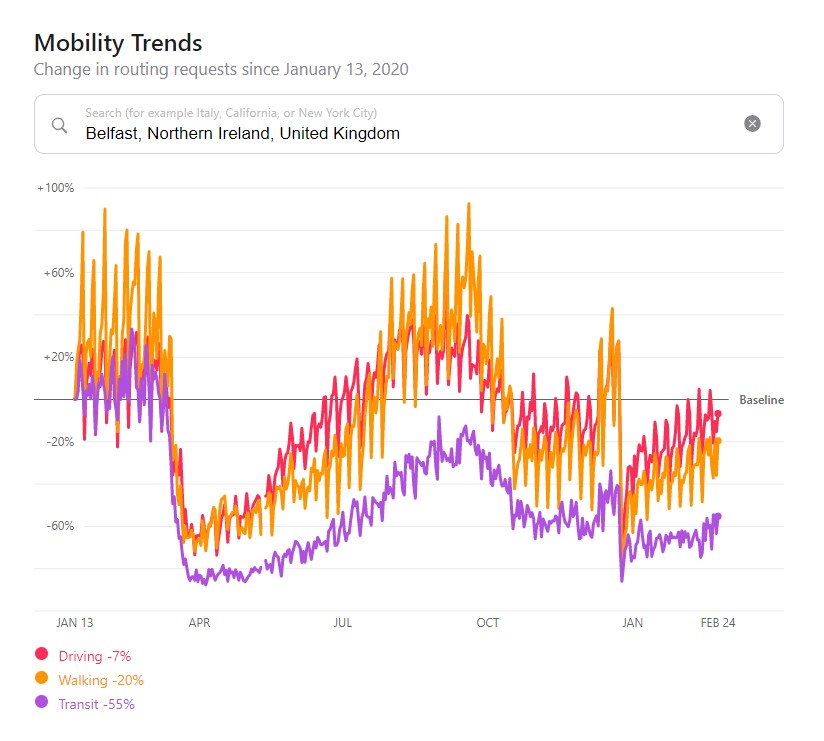
[26th February] With schools on half-term last week, it was difficult to predict how mobility would have been affected, however once again we see an increase in driving activity across Northern Ireland.
Across NI, driving activity was up 5%, giving a weekly rolling average at 94% of the baseline. In Belfast, we see a similar uplift, with driving activity above baseline several days in the last week. Pedestrian and transit activity within the city are increasing too.
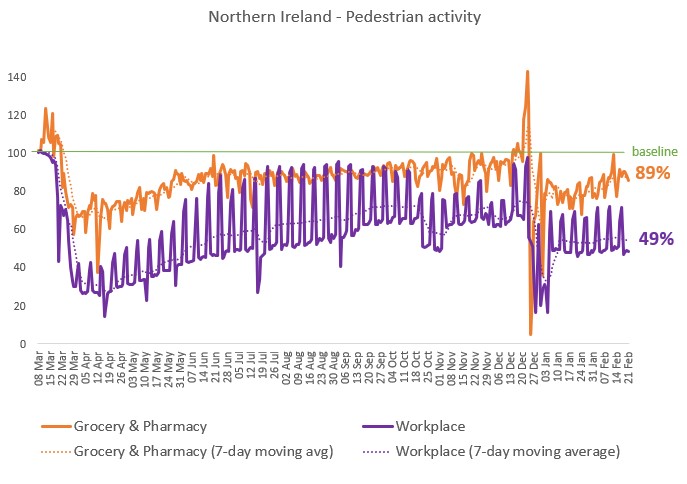
We have reported many times about the steady levels of footfall in grocery and pharmacy locations; this is unchanged again with the average at 89% of the norm. Workplaces are seeing footfall just below half of the normal levels (49%), reflecting the number of people who continue to work from home. This has displaced audiences from typical ‘business’ areas to more suburban environments, dubbed the donut effect. This reflects the change in mobility, with increasing numbers moving in their local areas, while key retail and office spaces within Belfast city centre remain sparsely populated.
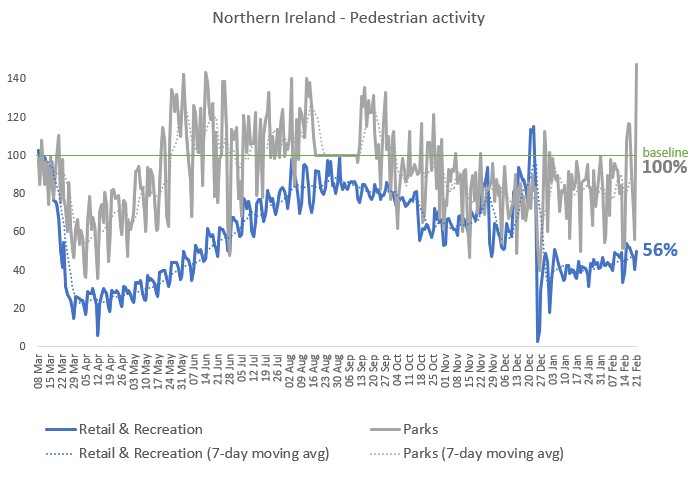
Parks and beaches have seen a boom in popularity, hitting 100% of the baseline in the last 7 days. Longer and brighter days, and slightly warmer weather are likely to be the cause. As we progress through spring and into summer, we would expect to see a pattern similar to 2020, where these locations are key hotspots for people movement. As restrictions remain in place preventing household gatherings, people will naturally seek out common ground to meet with friends, resulting in key OOH targeting zones.
Retail and recreation areas continue to see lower levels of footfall, with only a small improvement week on week as restrictions remain in place. From 8th March, click and collect will be available for some retailers, inevitably drawing people into town and city centres and boosting the footfall.