
UK economy now in recession
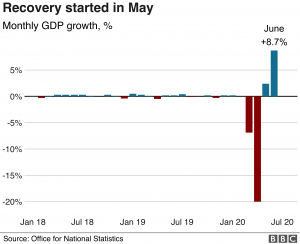
[14 August] For the first time since 2009, the UK economy is now in recession, measured as two consecutive quarters of decline. Economic output has been badly affected by the prolonged closures at the beginning of the pandemic, with household spending also reduced. As the country has reopened, the Office of National Statistics has said the economy bounced back in June as restrictions began to ease. Month-on-month, the economy grew by 8.7% in June, and 1.8% in May. Despite this, GDP (gross domestic product) in June remains a sixth below its level in February.
What does this mean for brands?
Unlike previous recessions, this one was no surprise. In fact, we’ve already written some thoughts about what it means for brands, here, as did Peter Field. This week, in the now, we wanted to revisit some of those key points and get brands thinking about what the current landscape and new audience insights might mean for their next move. This is the first ‘disease driven’ recession of our lifetime, and we’ve already seen how that impacted sales with panic buying and a shift in shopping priorities, with empty shelves a common sight in early lockdown.
Brands should avoid the temptation to pull all advertising, if possible. In some circumstances, it’ll be unavoidable however when budgets are still accessible brand building campaigns can maintain and grow existing share of voice.
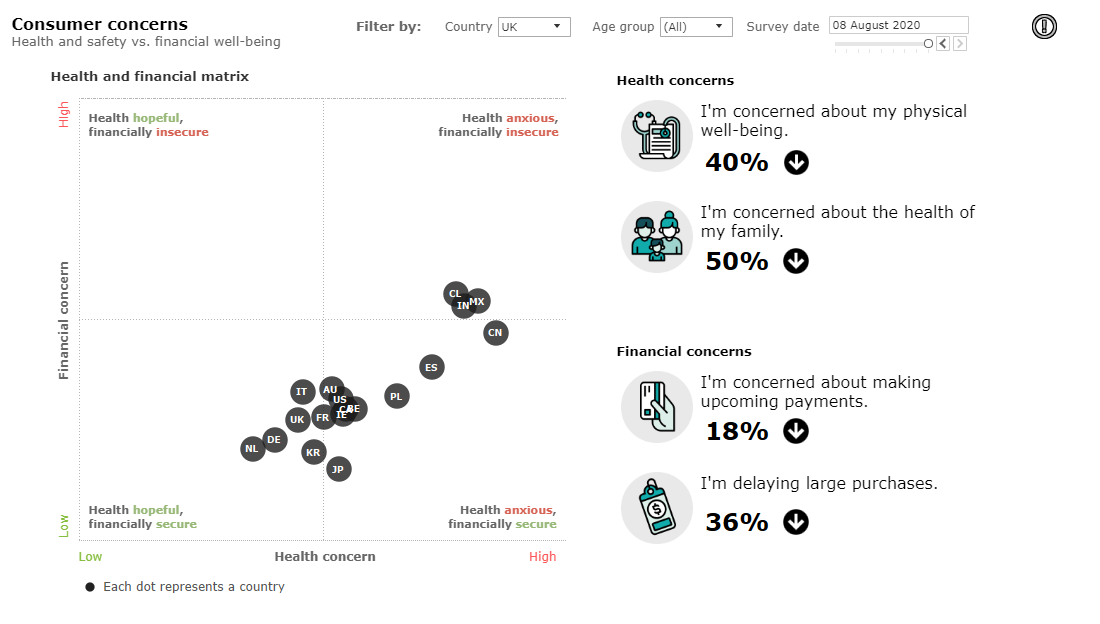
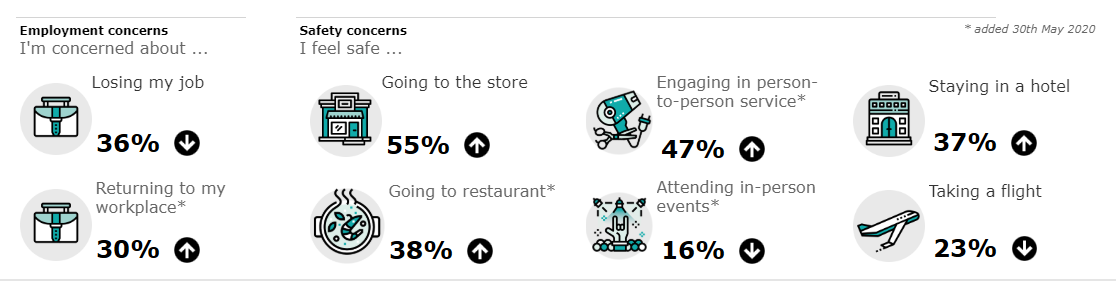
While the future is still uncertain for many, there is less fear of the unknown. The UK population is getting less anxious week on week, while concerns about health, employment and safety are also reducing. Exterion Media’s Work.Shop.Play research showed 18% of audiences were not worried in July, compared to 12% in March. 30% feel positive now, compared to 16% in March, while anxious has fallen from 61% to 35%.
For brands, this means a return to normal advertising will be welcomed. Supply chains have largely returned to normal, and consumers are still seeking value, especially those who are experiencing financial concerns.
Increase relevance to increase engagement
Delivering messaging that is relevant has been proven to increase campaign metrics, and in the midst of a pandemic it can lead to harder working OOH. Delivering empathetic campaigns that speak to consumers in the now can help to build positive connections, which will create a long-lasting association.
Strategic shifts in building market share may now be required. With changes to working patterns and a reduction in spending on big-ticket items, brands associated with these industries may benefit from a move away from sales activation to brand building, investing in long-term relationship building.
Forward planning is flexible
Forward planning is always going to be vital for brands, however if the last few months have taught us anything, it’s that flexibility and adaptability is also crucial for success. We’re nearing the end of August, and schools are returning as normal (we think/hope) in a few weeks. That signals the countdown to Christmas and despite a general feeling that a second wave, and potentially another lockdown is imminent, we will all want a festive season as close to normal as possible. When it comes to OOH campaigns, our recommendation is to plan and book in advance as much as possible. Early optioning to secure the most popular sites is always recommended. Flexible booking and cancellation terms are also available, so brands can feel reassured that they have options with their campaigns should the landscape change again.

