
Supermarket sweep
[2 July 2020] Supermarket sales continue to rise, with Sainsbury’s this week releasing their financial information for the last 16 weeks. Strong demand for store-cupboard essentials delivered sales uplift of 8.5% for the weeks until 27th June, with grocery sales growing by 10.5%. Despite most stores being closed, Argos (part of the same company) saw a 10.7% rise in sales as demand for personal fitness equipment and hair clippers skyrocketed. Shoppers bought fewer clothes from the business during this period, with sales dropping by 26.7%.
Throughout the pandemic, families in NI with children at home have had a significant change in their expenditure, spending an extra £572 than they would normally. In the UK up to 40% of households have been spending £52.05 more each week, according to Compare the Market’s financial confidence tracker.
ROI retail bounces back
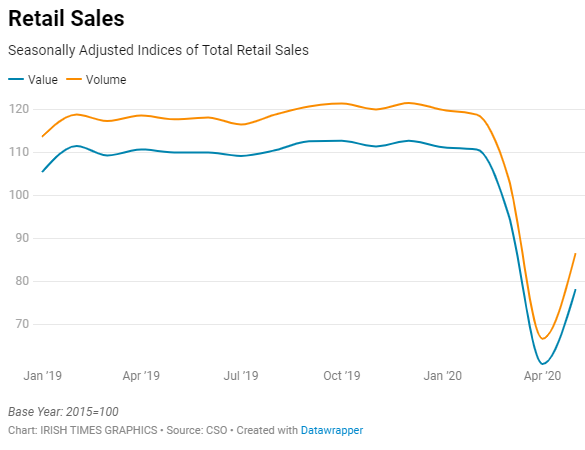
Analysis of retail performance following the change to restrictions in ROI shows sales have rebounded by 29.5% in May, compared to April. The Central Statistics Office (CSO) said this was the biggest monthly increase on record, following a collapse of nearly 36% in April, as lockdown took hold. On an annual basis, retail is still 26.6% lower than the same period in 2019, however the uplift is encouraging for the sector.
Minimising queues key to maintaining footfall
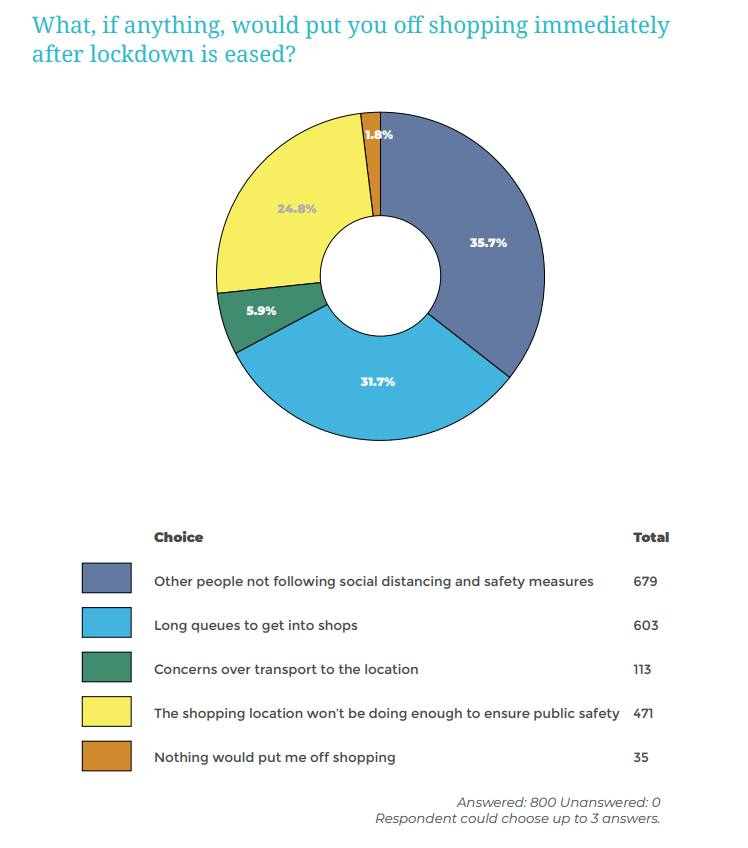
According to Springboard, concerns about others maintaining social distances is the main reason that shoppers may choose to avoid physical stores. 31.7% of UK adults cite concerns about queueing for entry as a barrier to in-store shopping, and as we progress through summer into winter, retailers will need to come up with new ways of managing entry to ensure footfall remains high. Technological solutions are something we’ve already looked at, with digital queues and entry slots booked via apps already trialed elsewhere.
Quality over quantity
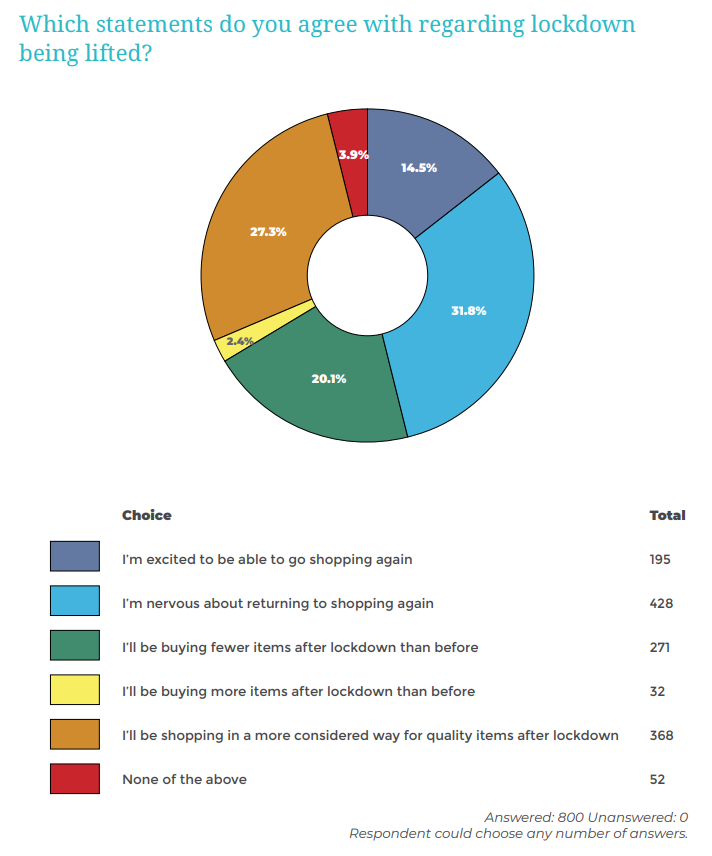
How audiences choose items is also likely to change as time progresses. Only 14.5% of UK adults were excited to go shopping again, with a predominant feeling of nervousness around returning to physical stores. Brands have a responsibility to demonstrate their commitment to safety of staff and shoppers, reassuring those customers who may be nervous and welcome them back with a positive experience.
Over 27% of respondents felt that the way they shop will have changed taking a more considered approach to purchasing decisions to choose quality items. While there will inevitably be price-driven decisions made, those who have the opportunity to invest more will likely take it. This opens the door to new brands with an opportunity to grow market share.
Point of sale OOH advertising formats offer brands and retailers the chance to talk directly to consumers on the path to purchase. Around 60% of people now spend up to 20 minutes queueing to gain entry to shops, often in proximity to formats such as Adboxes and Purchase Point 6 Sheets. On the high streets, Digital OOH is found in key shopping locations, reaching huge audiences every cycle, helping to influence opinions while shoppers are relaxed and could consider switching brand in search of higher quality items.

