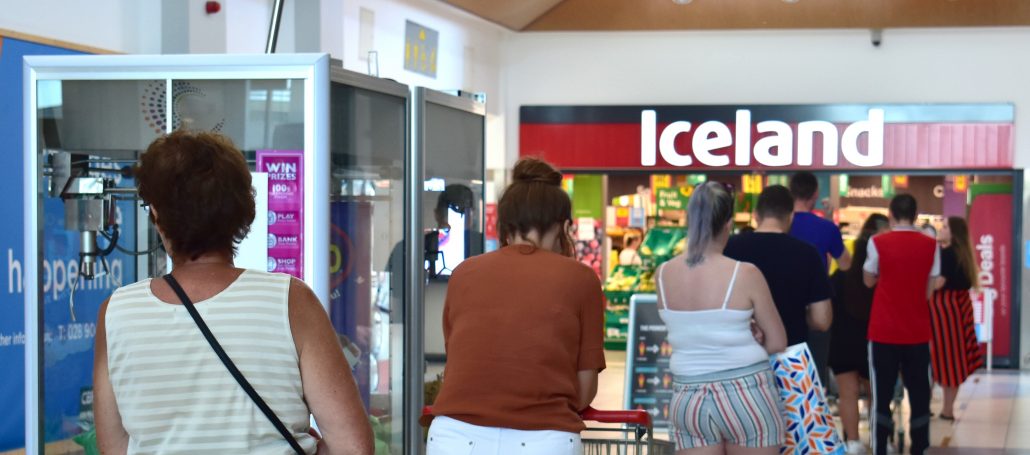
Grocery is growing
[4 June 2020] The cost of shopping has fallen by the biggest decline since 2006, according to the latest shop price index from BRC-Nielsen. The drop is largely due to non-food items, where retailers sought to boost spending with hefty discounts. Non-food prices tumbled by 4.6% while food costs dropped by 2.4% in May. Basket totals remain higher than average, sitting around £9, compared to £6-7 in 2019.
Additionally Kantar reports further growth in the grocery sector. Emer Healy, retail analyst, said: “The Northern Irish grocery market recorded strong growth in the past year largely reflecting the impact of the recent lockdown. Total take-home grocery sales grew by 4.4% during the 52 weeks to 17 May 2020.
“Looking at the latest 12-week period, growth spiked to 19.7%, as people stocked up pre-lockdown and continued to eat more meals at home.” Tesco remains the top supermarket in the region with a market share of 35.5%, followed by Asda (16.1%).
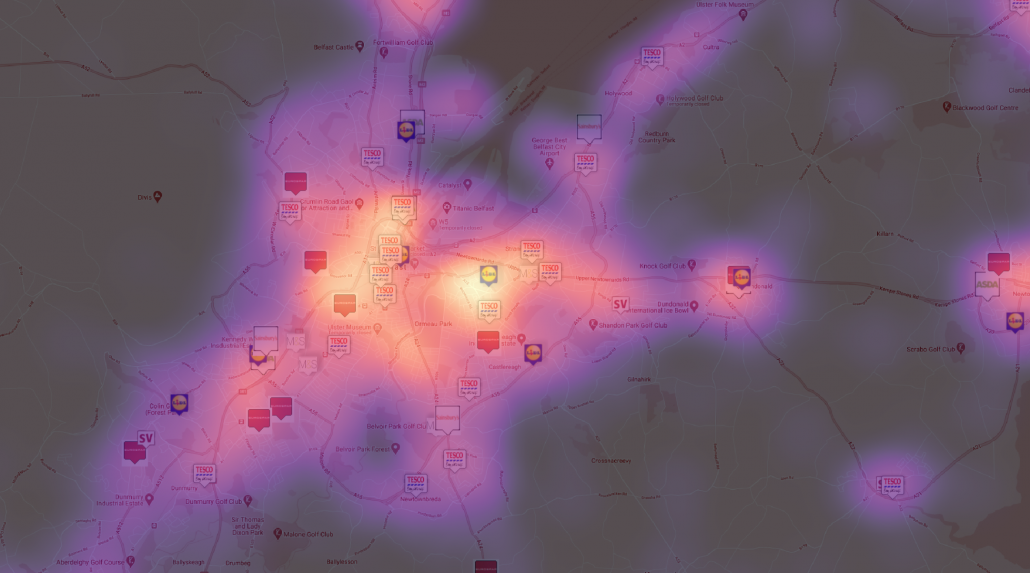
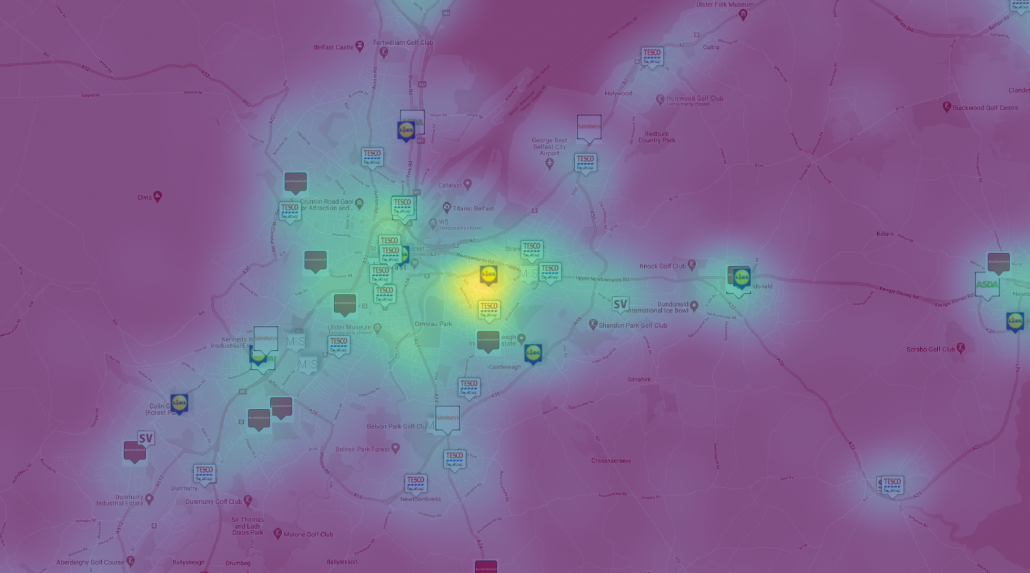
This week we’ve fused Locomizer auto and pedestrian volumes for the week 26-31 May with the supermarket locations contained within our Pinpoint mapping database of POIs. Hotspots are visualised based on a combination of time and users giving a complete picture of mobility. These outputs can be further overlaid with OOH panels to give brands the opportunity to engage the expanding OOH audience on path to purchase.
Key Consumer Drivers
Value for customers
Value remains a key driver for consumers, many of whom are experiencing financial concerns. Kantar noted value as one of its seven pivots for future growth. Cash strapped shoppers are more likely to switch brand out of necessity, with Kantar estimating as many as 38% of adults will look to a different brand. Additionally, many supermarkets paused their grocery deals as demand outstripped supply in the early days of the lockdown, putting further pressure on wallets.
Better pre-shop planning
We’re eating most, if not all, our meals at home at the minute. The food-to-go sector has taken a hammering and many people are being more considered in their planning and purchasing. Much has been written about the increase in fakeaways and baking banana bread, and the growth of a single weekly shop. This would then lead us to think that more shoppers are meal planning rather than choosing on impulse, and The Grocer estimates more than 50% of shoppers now stick to a shopping list. As well as the opportunity created by brands that offer simple recipe or meal kit ideas, it also opens the door for brand switching, where the product is required and brands are largely irrelevant. Additionally, the new one-way system through many shops removes many of the gondola-end opportunities that offer prime promotional space in stores, minimising the opportunities for impulse buying.
Emotional connections
It’s not called retail therapy for nothing. There is a clear emotional connection involved when we shop. Memories and emotional responses with a brand or category can have huge impact on future decision making. In a pre-Coronavirus study by Kantar, CX-2020 found that “third of people said that interacting with grocery brands leaves them with no positive feelings. Take a moment to think about this. This means that one in three people shopping your store, watching your content, or using your product feels, well… nothing.”
The pandemic has created an opportunity for retailers and brands to rebuild or form new associations, both with products and the store environment itself. The Kantar Covid-19 Barometer (Wave 3) found 35% of people are avoiding superstores and malls, and 32% find online shopping favourable to in-store. 95% of shoppers believe it is important that accommodations are made to ensure social distancing and hygiene levels are maintained. Repositioning as a safe and convenient environment is a key message that brands should be delivering, at every opportunity.
These emotional connections are deeply ingrained and studied, and a recent webinar with Orlando Bloom from System 1 looked at the different styles of advertising, whether driven by the left, and more analytical brain or the right, emotional brain. Where brands can reach consumers with the right brain, connections will resonate more and create a more positive engagement.
Fuss free shopping
While we’re getting more used to queueing to go into shops, there is clearly demand for well organised and laid out queue and store pathways. This will ease the anxieties around shopping for many and make the shopping experience more fluid and faster. Additionally, some retailers have started offering provisions boxes, a collection of pre-packaged items. Marks and Spencer launched their range, switching its clothing and home distribution centre to the food boxes, allowing 2,500 to be delivered each week. Intended to help vulnerable shoppers, the boxes are likely to have widespread interest, with options including fruit, vegetables, cupboard staples and meats. The boxes also enable M&S staff safety, as automation allows order fulfilment with less human contact, increasing the capacity without compromising social distancing.
Staff value
Every Thursday for the last 10 weeks, people across the country have taken to the doorsteps to clap for carers, however there are thousands of people working in other roles that don’t get the same level of appreciation. According to YouGov research, “Key workers in the logistics, manufacturing, and retail sectors are the least likely to feel their work is appreciated at 46%, this is 17 percentage points more than those who felt appreciated before. But 44% still feel their work goes under-appreciated even during the pandemic.” That’s a lot of staff who feel their work warrants a massive thank you, and employers should lead the way.
Deliver messaging on OOH
The Grocer reports that nearly 60% of us are spending up to 20 minutes queueing outside shops, with 15% waiting more than 20 minutes. This is a huge opportunity for Out of Home, located at the entrances of many retailers, including supermarkets and convenience stores. Where a dedicated retail format isn’t available, proximity mapping can deliver other OOH formats in close proximity to queues of patiently waiting shoppers, who would welcome a distraction from the queue they’re waiting in, whether it’s a thank you to your hardworking staff, reassurance about the safety measures you’ve undertaken or a quick recipe idea that shoppers can add to their shopping list.