
Delivering content to all ages
[7 August] Reaching audiences with relevant messaging is the key to success of any campaign. Media planners, buyers and specialists work to understand the target audience to ensure delivery of content is in the right locations at the right time. And it’s not anecdotal evidence. The Moment’s of Truth research showed that adding contextual elements to campaigns increases key metrics around recall, brain response and sales uplift. All metrics increased when audiences feel the campaigns are talking to them.
Normal life has been interrupted by the pandemic, and as a result we’ve had to get better and understanding what audiences think, feel and do. These weekly emails go some of the way to understanding behaviour and when combined with our powerful insights including mapping, we can deliver campaigns to specific demographics, particularly useful for hard to reach groups.
Boomers, Gen Z and Millennials
At the height of lockdown, TV consumption in NI peaked at 4 hours and 53 minutes per day watching something on the TV screen in April 2020, a 69-minute increase on the figure for 2019. As months went on, the viewing figures started to fall. The weather improved, desire for up to date news started to wane and lockdown started to ease, encouraging more people out of their home. As TV audiences started to decline, OOH audiences grew. Younger audiences tend to watch least TV. There is a significant variation in TV consumption across age demographics. On average, 16-24-year olds in NI watch 62 minutes of TV per day, compared to 295 minutes for those aged 55 and over.

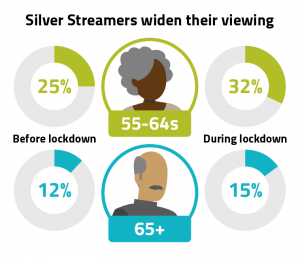
Younger audiences tend to watch less live broadcast TV, but use streaming and gaming services more frequently. 56% of households here have a subscription to a SVoD service. Following its launch earlier this year, Disney+ gained a large share of the SVoD market, now the third most popular service, behind Netflix and Amazon Prime. The OFCOM Media Nations report for the UK estimates that 12 million people signed up to a new subscription during lockdown, with around 3 million subscribing for the first time. The ‘Silver Streamers’ grew during lockdown, with 32% of 55-64s used SVoD during lockdown.
Online advertising can feel intrusive
Retargeting and online display advertising are incredibly popular, however some audiences believe this type of advertising is off-putting and feel it’s intrusive when they see advertising as a result of past online activity. Kantar’s Dimension 2020 study found that older consumers (65+) are more concerned about their online behaviours being used to target them. The research found that younger audiences were more receptive to ad retargeting and they wanted to see relevant content. “There’s a fine line between relevance and an unwelcome pursuit. Excessive frequency and inaccurate retargeting can turn consumers off and reflect negatively on an advertiser.”
Safety of online advertising is also an ongoing concern. Global and local brands have stopped spending with Facebook as a result of a lack of action over hate speech, click farms have been discovered to falsely inflate metrics and even well known news sites can carry advertising from scam companies. The association of legitimate brands next to negative stories or content is an ongoing concern.
Dynamic OOH delivers context without discomfort
For brands looking for a way to communicate in a more passive way the audiences, Digital and Dynamic DOOH are perfect. Out of Home is consumed when people are in a different mindset, and the contextual triggers are related to an environment rather than an individual, for example location or the temperature in that location. Unlike retargeted campaigns, this doesn’t give consumers a sense of unease that someone is snooping on their every click.
Location targeting enables us to reach audiences by age, highlighting messages on daily touchpoints or one-off events. From students to silver surfers, we are led by data. Building audience profiles in TGI enables our marketing team to delve into the psychology of your target audience and see what’s important to them, which can help to influence creative strategy as well as format choice.
Out of Home continues to reach significant audiences, with displays in locations that intersect audiences at daily touchpoints. Working alongside other traditional media is a strength of OOH, building coverage with hard to reach audiences, particularly younger people and urbanites. OOH is a good ‘fit’ with TV and radio to fill gaps in traditional audiences. The Dynamic and Digital OOH network also enables better scheduling with other media types, choosing day part advertising to align a media schedule across multiple environments. In addition the flexibility with OOH delivers opportunities for advertisers. That flexibility spreads across every aspect of our business, from creative changes or delivering creatives in specific areas or locations to quick turnaround of campaigns, should important communications be required.
(All statistics via OFCOM, unless otherwise stated)

