B&Queue
[19 June 2020] In the last week, we’ve seen audiences return to our high streets with the reopening of most non-essential shops. While there wasn’t the same level of queueing in Belfast for big names like Primark and Zara, as was seen in London or Dublin, it’s a huge boost for all city centre traders.
Even before the grand re-opening, retail in Northern Ireland was experiencing the smallest shoots of recovery. Boosted by good weather and two bank holidays, May’s footfall for shoppers in retail outlets increased by over 6% in the month, compared to April. According to Springboard, the uplift is due to the reopening of large DIY stores and garden centres.
B&Q and Screwfix parent company, Kingfisher, also proves the point. Stores initially closed in March, but reopened with click and collect services, before moving to full store opening. Year on year sales jumped almost 22% in the three months to 13th June, although there was a drop of almost 25% in the first quarter of the year following the store closures.
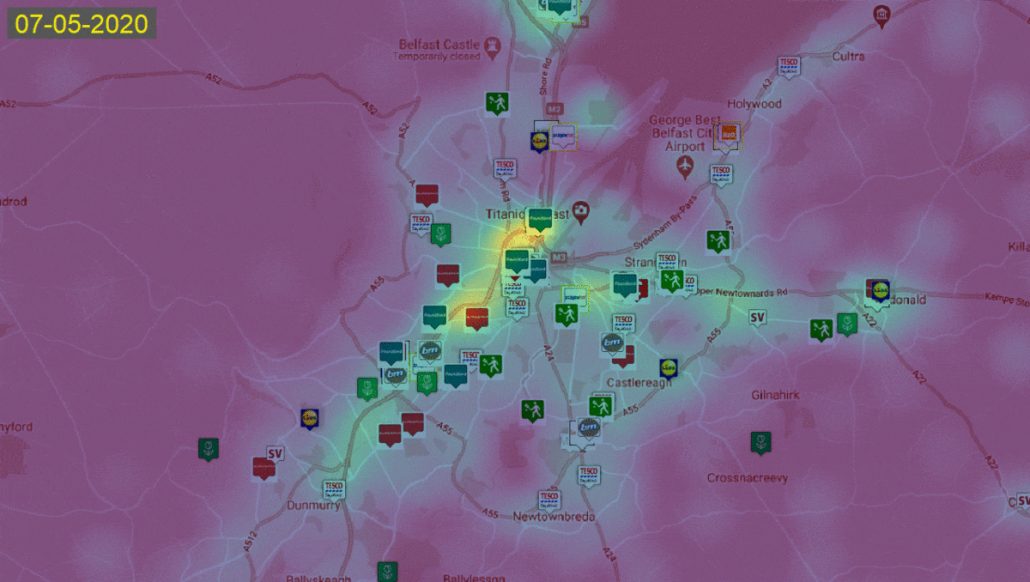
We’ve used our mapping and insights tools, including Locomizer to create the animations below. These show audience movement in and around DIY stores and garden centres, comparing the 7th – 18th May, and 8th – 15th June.
The Springboard research also shows that retail parks are faring better, with a drop in a -55% drop in footfall, up from April’s drop of -67%, many of which will have grocery and DIY superstores within them. High streets suffered the biggest blow, with footfall down by almost 80% from the same period last year.
87% will buy more from local shops
Retailers everywhere have been urging a ‘shop local’ agenda throughout the pandemic, and there are calls for the NI Executive to launch additional support measures for high street retailers. Bricks and mortar shops may provide experiences that online can’t replicate, but overheads are high and trading can be tough. Research by Irish Market Research and Data Specialists, Amárach, shows that 87% will buy more from local shops if they can, and 82% will buy more Irish products.
How we pay for our shopping has also been affected by the pandemic. Following early warnings about transmission of the virus from cash, we’ve become increasingly reliant on contactless and mobile payments. The use of physical money is forecast to decline by almost 40% in the UK in 2020, 10% higher than the European average.
Engagement is crucial for repeat visits
Whether it’s a high street or retail park, shoppers will only come back to physical shops if they have an enjoyable experience. Smart queueing systems will become even more important to ensure footfall as the weather changes, enabling customers to book a time to enter stores via smartphone app. This will help make the shopping experience more seamless.
Floor graphics are being used to remind about adequate distancing measures, but there’s an opportunity to take customers on a different in-store journey, highlighting special promotional areas or new departments. We’ve already looked at how shopper behaviour has changed, and we’re less likely to browse in stores, so interrupting customers will be key to influence impulse buys.
Queue side entertainment and window displays are also key to entertaining those waiting for entry to your store. This captive audience sees a dwell time like never before, and offers a new opportunity to engage with shoppers, on their path to purchase. OOH formats located at the point of sale, such as Adbox, Asda Live and Purchase Point offer even more value for money now, and innovative solutions to ad delivery on these platforms will go another step to improving the shopper experience.
For brands keen to explore alternative methods of communication with audiences, Ambient OOH formats often fit the brief. Available in niche venues and locations, delivery of messaging via floor graphics or reverse graffiti are common. Adwalkers and Adbikes are also highly efficient for delivering messaging to captive audiences, accessing locations which aren’t typically covered by classic OOH formats.