
Grocery sales continue to rise, as lockdown slowly eases
In the four weeks to 17th May, Kantar report that take-home grocery sales growth increases to 17.2% YoY, as the Government began to ease lockdown restrictions in England. Footfall in stores remains significant and there is still high demand for online grocery delivery slots. Additionally, the trend throughout April for fewer but bigger shopping trips appears to continue.
According to the Retail Data Partnership, which represents independent convenience stores, there are similar trends. While footfall is lower than 2019 levels, there is still an upward trajectory of the number of shoppers, and basket totals have increased from just over £6 per trip to £9.27. Average store sales have also increased by 32.4% YoY.
Exterion Media’s Work.Shop.Play research found that 67% of people in Northern Ireland were shopping at least once a week, with 18% of those making multiple trips. With social distancing measures now well established, the research found that 58% were fairly comfortable visiting supermarkets.
Market Share
All ten of the UK’s major supermarkets and the combined group of independent retailers increased sales in the 12 weeks to 17th May, according to Kantar. Co-op reached 7% market share, a level last seen in 2011 as shoppers stay closer to home. Iceland climbed to a 2.4% share, the highest since 2000.
What about the future of physical non-grocery shopping?
Brown Thomas and Arnott’s, two of Dublin’s most prestigious names are gearing up to reopen their doors, to a different world they closed on back in March. In a report in the Irish Times, the retailers are planning to digitise many of the normal shopping interactions, including makeup testing. Garments will be steam cleaned after handling by customers and returns will be quarantined. Additionally, shoppers will be able to book a browsing slot by app, with queue facilities for walk up customers.
Pat Cassidy, PML Group’s Digital, Innovation and Experiential manager recently wrote an article for our Engage newsletter looking at how ‘Covid-tech’ will influence OOH.
Digital Hand Sanitisers
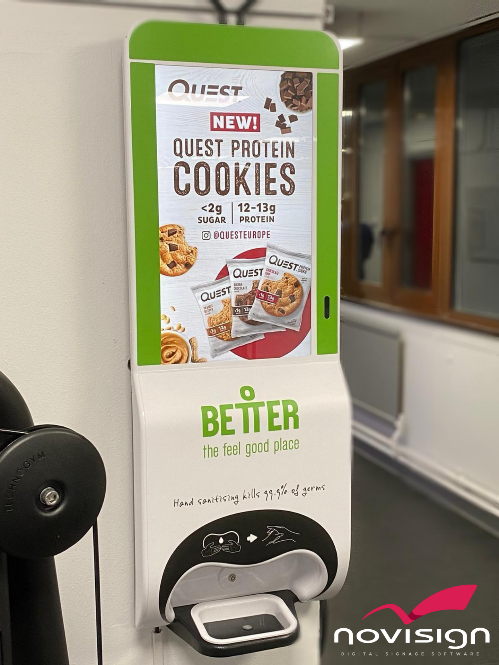
Hand sanitizers are one of the first touch points that the public will encounter as they enter an outlet. New digital advertising screens with built-in sanitizer dispensers are coming on stream.
Queuing Systems
As socially distanced queuing becomes a normal part of our day to day lives, companies have been looking at innovative ways to improve the customer experience. Cue intelligent digital signage and virtual queuing software.
Intelligent digital signage can be used to count customers entering and leaving retail outlets, thus delivering a real time stop/go system. The signage can also communicate brand messaging to those waiting patiently to gain entry and offer a welcome alternative to the phone screen for some distraction.
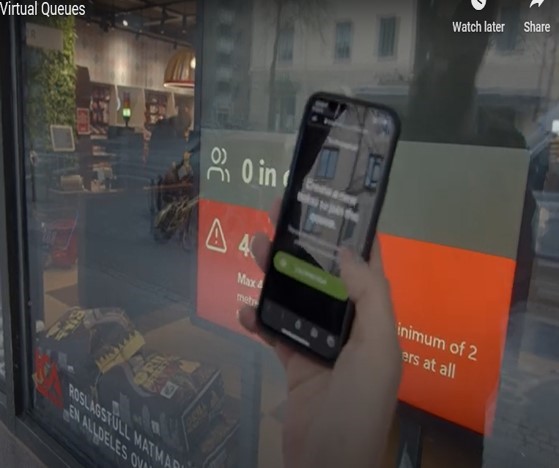
Asda, Britain’s third biggest retailer is beginning trials of a virtual queuing system. Customers will be able to get a virtual ticket by scanning an OOH poster and return to the safety of their car whilst waiting to be called via their mobile phone.
Self Service Interactive Screens and Mid-Air Haptic Technology
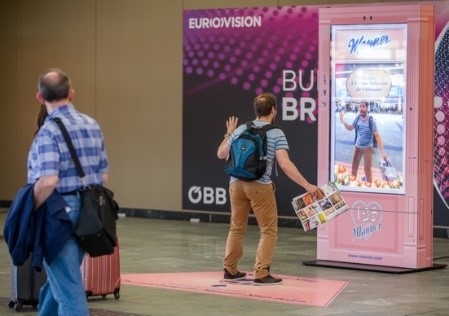
To minimise human contact, there has been a rise in self-service interactive kiosks and screens, similar to the interactive order screens often found in McDonalds restaurants. To eliminate the “touch” element, mid-air haptic technology is accelerating. Mid-air haptic technology allows you to interact with interactive digital screens using hand gestures rather than physical touch.
The pace of innovation has been impressive. Out of Home has shown itself to be nothing if not flexible and adaptive in the past decade. In a media sense, what we are experiencing is a shift in audience behaviour. Change brings opportunity. Out of Home is opportunity.

